The journey of artificial intelligence, or AI, has some fascinating early ideas that set the stage for what we have today. Back in the 1950s, pioneers like Alan Turing started to wonder if machines could think like humans. Turing proposed the famous Turing Test, a way to measure a machine's ability to exhibit intelligent behavior. If a machine could hold a conversation without revealing that it was, in fact, a machine, it could be considered "intelligent." Imagine that!
Then came the Dartmouth Conference in 1956, often called the birthplace of AI as a field. This gathering of bright minds aimed to explore the possibilities of creating machines that could learn and reason. Researchers believed that with enough computing power and the right framework, they could teach machines to mimic human decision-making and problem-solving skills. It was ambitious, exciting, and, spoiler alert, a bit ahead of its time.
At this point, ideas about AI were mostly theoretical. People thought about algorithms, logic, and how to replicate human thought processes. The concept of neural networks, inspired by how our brains work, also started to gain attention. These early networks laid the groundwork for many of the advanced AI systems we see today. The seeds were planted, and the excitement around AI began to grow.
As the years rolled on, researchers faced challenges. There were periods of great optimism followed by frustrating setbacks, known as "AI winters." But those early ideas didn’t fade away. They shaped the ongoing quest for smarter machines and set the foundation for the rapid advancements in AI we’re witnessing now. Those humble beginnings remind us that every big idea starts somewhere small.
Key Innovators in AI History
When we think about AI, certain names pop up that changed the game. These innovators paved the way for the technology we rely on today. Let’s take a quick look at a few key figures in AI history.
First up is Alan Turing, often called the father of computer science. He created the Turing Test, a way to measure whether a machine can exhibit intelligent behavior similar to a human. Turing's ideas laid the groundwork for modern computing and artificial intelligence, making him a pivotal figure in this field.
Next, we have John McCarthy. He didn’t just invent the term "artificial intelligence"; he also organized the famous Dartmouth Conference in 1956, which is considered the birth of AI as a field. McCarthy's work focused on making computers capable of understanding and processing human language, a goal that still drives much of AI research today.
Then, there's Marvin Minsky, a true pioneer who co-founded the MIT AI Lab. He spent decades exploring how machines could learn and think like humans. His research took AI from theoretical concepts to practical applications, inspiring countless engineers and scientists.
Lastly, we can't forget about Geoffrey Hinton, a more recent innovator. Often referred to as the "Godfather of Deep Learning," his work in neural networks has been crucial for advancements in AI. Thanks to Hinton, machines can now recognize images and understand speech way better than ever before.
Milestones That Defined AI Progress
The journey of artificial intelligence has been filled with exciting moments that really pushed the boundaries of what machines can do. One milestone that stands out is the creation of the first neural networks in the 1950s. These early models tried to mimic how our brains work, laying the groundwork for the AI we see today.
Fast forward to the 1990s, and we have IBM's Deep Blue. This computer made history by beating world chess champion Garry Kasparov in 1997. It showed the world that machines could think strategically, changing the conversation around AI entirely. People started to realize how powerful AI could be, not just in games but in real-world applications.
Another game-changer came in 2012 when a deep learning model won a major image recognition competition. This breakthrough opened up a whole new world of possibilities. Suddenly, AI could understand and process images much better, which sparked innovations in fields like healthcare, where it helps in diagnosing diseases from medical images.
Finally, the rise of personal assistants like Siri and Alexa made AI part of our daily lives. These apps use natural language processing to understand and respond to our requests, making technology feel more accessible. This shift is huge because it brings AI into homes, making it feel like a part of our everyday routines.
AI’s Impact on Today’s World
Artificial Intelligence is shaking things up in so many areas of our lives. From the way we work to how we shop and even how we communicate, AI is making everything smoother and smarter. For instance, think about those personalized recommendations that pop up while you're browsing online. That's AI analyzing your habits and preferences to suggest what you might like next. It’s like having a shopping buddy who knows exactly what you love!
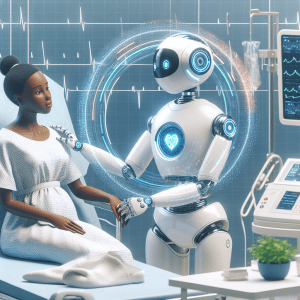
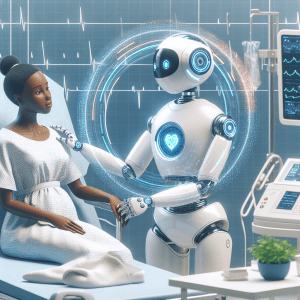
In healthcare, AI is becoming a game changer. Doctors use smart algorithms to diagnose diseases faster and with better accuracy. Tools analyze medical images and data, helping catch issues early on. This means patients get the right treatments sooner, which can be a lifesaver.
Education is also feeling the AI touch. With tools that adapt to a student's learning pace, everyone gets a more personalized experience. Whether it’s providing extra practice on difficult topics or suggesting resources based on student progress, AI helps make learning more engaging and effective.
And let's not forget about how AI is transforming customer service. Chatbots are now answering questions around the clock. They handle everything from simple queries to more complex concerns. This means you get quick responses without waiting on hold forever. It’s a win-win for businesses and customers alike.